Saturday, August 26, 2017

What Charlottesville means to me in terms of White Privilege in the autistic community

The recent events in which white nationalist groups show up to protest in Charlottesville, Virginia armed with torches which resulted in the death of a 32-year old woman, has sparked a lot of emotion and conversations about racism in this country.  Like everyone else, I am shocked that an event in which Neo-nazi and white supremacy groups outwardly express their bigotry towards minorities would happen  in 2017.  I thought the days of  white supremacy, KKK, lynch mobs and overt racism were behind us and were solved by the civil rights movement.    It was hard to articulate my thoughts on this matter and it took awhile to compose a facebook status.    Then again I am not surprised that an event like Charlottesville took place since there still seems to be ambivalence of embracing differences in terms of racial, religious views,sexual orientation as well as disability that takes place in this country. These recent events in Charlottesville  has prompted me to think about how America in the 21st century still supports a structure that favors Anglo whites.  More specifically,  Charlottesville made me examine in how white privilege dominates the autism conversation and community.    It is with these thoughts which will shape the subject of this post.  I just want to issue a trigger warning since some parts of this post might come across as scathing and might make some readers uncomfortable or defensive.   In particular, the examination and questioning  of white privilege might make some of my white readers uncomfortable.  This is just an opinion piece from my perspective and observations.  It is not my intention to accuse whites as being racist. In my own life, I know a lot of white people who are all around good people.  This post is critiquing the power structure of white privilege and  not specific white individuals.
 Like everywhere else in society, white privilege is present and dominates the autism community.  This is prevalent in the fact that ethnic minority children tend to be overlooked for diagnosis and that white upper middle class families are more likely the ones to receive early diagnosis and services.   Getting a formal written diagnosis of autism is a privilege in of itself since it is the gateway to receiving services and supports.  This is due to the fact that Leo Kanner, the clinician who helped play a big role in the formulation of autism as a formal diagnosis category wrongly assumed that the disorder was more common in upper middle class white families.  The consequence of Kanner's actions is the reason why autism is a "whitewashed" disorder.  This attitude and belief still pervades today in the 21st century.  It also doesn't help that the media reinforces white privilege when it comes to autism by frequently portraying Caucasian male characters in film and television.    The structure of white privilege is very powerful because it affects the conversation and priorities on autism as well as whose stories or  narratives get told and recognized in the greater autistic community.

As a Japanese American autistic self advocate, I have noticed over the years that the majority of diagnosed autistic people are overwhelmingly white.  However, it wasn't until I got involved in self advocacy that I realized how rare and uncommon someone like myself was since there are not too many self advocates of color in general.  I also realized how extremely lucky I was to have received an early diagnosis since as I discussed earlier that autistic children of color rarely get an early diagnosis.  Going back to the relative absence of self advocates of color, it is hard for people like myself to get the recognition in the autistic self advocacy movement.  When you think about it, the most widely recognized autistic self advocates who are frequently asked to present at conferences are Caucasian and almost always come from privileged backgrounds and have advanced degrees.

A well known example of this is Temple Grandin.   While I admire Temple Grandin for setting the path  for other autistic self advocates, I find it problematic that the greater autism community treats her like an "autism Jesus" in which her teachings and views are equivalent to the holy bible on autism and  should be applied to all autistics.   As a result other autistic voices (particularly those of color) are often overlooked or not given much attention.  As Lydia Brown states in her post "Critiquing Temple Grandin," a large part of Grandin's widespread recognition is connected to her race and social class.   Echoing Ms. Brown's sentiments, Grandin grew up in a very wealthy background which afforded the privilege to get her where she is today.   Her  family was able to afford a nanny to work extensively with Temple to develop her social and self care skills (which can be equivalent to the 40 hour a week ABA that often is prescribed to autistic kids).   She also went to a prestigous boarding school (another luxury afforded to the most privileged families) where she met her science teacher who played a big role in Temple's decision to pursue a career path  in animal science.  Most families (especially ethnic minority families) are not able to afford some of the luxuries Temple was given.  Although my family's income was modest, there was no way that my parents could afford to send me to a boarding school or have a nanny due full time ABA with me.  In fact they did not want to go down the route of spending a lot of money doing  an  extensive therapy regiment on me because it was too expensive and too intrusive for us.    In sum,  the  overemphasis on white self advocates such as Temple Grandin prevents the voices  of autistic self advocates of color from getting recognition.

Another example in which I believe white privilege infiltrates the autism community, is that the most well known and largest autism charity  Autism Speaks was started by  Bob and Suzanne Wright who also come from a very privileged background as being former news anchors on NBC.    Being former TV news anchors affords them the privilege of being connected to Hollywood as well as celebrities.     The backing of celebrities allowed Autism Speaks to have so much influence on how autism is discussed in the greater society and why they were allowed to perpetuate negative messages about the condition for so long.  Most importantly, they played a big role in how funding was allocated for autism research in terms of finding causes and cures and early intervention.    As a consequence of this, there is relatively little research that is adequately addressing the needs of autistic adults.  Autism Speaks does relatively little to address the priorities and needs of the autistic community.  I feel that they don't do enough to address disparities in autism diagnosis among ethnic minority groups as well as addressing cultural gaps and barriers to getting the right services and accommodations.  This is why there are smaller disability rights groups that exist because I feel Autism Speaks is too busy hosting expensive Galas and national walks.  In sum, the reason why I believe Autism Speaks grew up to be a very powerful organization is because of its roots in white privilege.

The events of Charlottesville has made me examine the power structure of white privilege in the very community that plays a big role in my life: the autism community.   Although the reference to Charlottesville might not make sense to some readers ,  I just wanted to get people to think more deeply how the autism community is geared and tends to favor upper middle class white families.  We need to be better at  recognizing and addressing cultural barriers that so often effect ethnic minority families in obtaining a diagnosis as well as services and supports for their kids.  The best way to this is that we need to reach out to these families and educate them on the signs of autism as well as resources that are available in the community.  The good news is that  there are organizations and projects going on that are attempting to address these issues.    Most importantly, there needs to be more resources to empower and develop autistic self advocates of color.  By having more autistic self advocates of color will send the message to society that autism is not exclusive to Caucasian Americans.    Lastly, I want  whites to act as allies and to use their privilege to address inequality and prejudice both in and outside the autism community.   Like I mentioned earlier, I know plenty of whites who  are empathetic and want to help  close the racial gap that is currently present in the autism community.    If we work together, we can accomplish our goals on equality faster.  I hope this post has opened people's eyes on the inequality that still exists in the neurodivergent community.

Some Helpful Articles that address the race problem in autism :


  • "Autism's Race Problem" -Pacific Standard 
https://psmag.com/news/autisms-race-problem

  • "Autistic Girls of Color: Missing from Media Narrative"- Leanne Libas
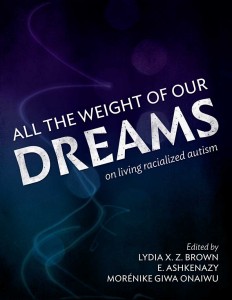
 http://womensenews.org/2016/08/autistic-girls-of-color-missing-from-media-narrative/


Image: The first Anthology consisting of autistic writers of Color produced by the Autism Women's Network


Monday, August 14, 2017

Communication Challenges as a Verbal Individual on the Spectrum

In thinking of other topics I could write about on this blog,  the list is endless.  However, I want to discuss a topic I feel that is applicable to a lot of people across the spectrum.  It is about communication challenges and trying to articulate complex feelings.  Although I have normal verbal abilities and can participate in a back and forth conversation most of the time,  I still have communication challenges in which speaking can be hard sometimes.  It tends to occur when I try to communicate deep personal feelings or desires but do not have the right words (or word choice) to verbally convey what I want to say without people misunderstanding or wrongly misinterpreting my intentions.    It also doesn't help that when you are tired and exhausted (as I am currently feeling as I am writing this post), getting the words out is even harder.   

Going back to my previous statement of  not having the right word choice in communicating my thoughts,  I had personal experiences that resulted in me being frustrated or misunderstood in conversations between my parents, therapist and others close to me as a result of this discrepancy between the thoughts in my head and what comes out of my mouth.   On the other side, people would often be perplexed because they don't understand what I am saying.  There are multiple ways to combine words to communicate a single thought.  Because of this, the words come out jumbled and mixed which makes it hard to verbally form a coherent sentence.

Anticipatory anxiety about how the other person would react if I share my thoughts is another factor that can effect my verbal communicative abilities.  "What if he/she doesn't get it?" or "What would other people think if I share my personal thoughts?" are thoughts that swirl around in my head when I am about to enter an intense conversation.  These invasive thoughts due to anxiety prevent me from thinking clearly on communicating my thoughts that I end up pausing or stumbling in the middle of the conversation figuring out what I should say next. 

In general, when the anxiety or figuring out how to verbally communicate intimate and emotional thoughts becomes too much I either try to abruptly change the subject or reply "I don't know."  Luckily, the people close to me  recognize when I am using these tactics as avoidance and don't take "I don't know" as an answer or move on to another topic without allowing me to accurately express my thoughts. I like that the people around me don't take what I say at face value and always take the time to allow me to accurately articulate my thoughts into words.

This is why I communicate better by writing, emailing or texting.  As other autistic advocates share, writing is a lot easier because it allows for more time and flexibility to effectively get the words out.  When I am allowed more time to process what I want to say, it removes some of the anticipatory anxiety that can become a barrier to my communicative abilities.  I find that blogging has allowed me to fully express my inner thoughts, desires and emotions that would be too difficult to talk about verbally since I have the time to think about what I want to say and to make sure the words I use will accurately communicate my message in  a way that others will understand. 

I wanted to write a post about my personal challenges with  verbal communication to get people to understand that  communication difficulties are not exclusive to those on the spectrum who are nonverbal or have limited verbal abilities. So-called "high-functioning" individuals on the spectrum have these issues also.  In fact, communication challenges is a core feature of autism spectrum disorders.  Just because on the surface I have normal verbal abilities doesn't mean what I say always reflects how I am thinking or feeling inside.  I also wanted to share my experience in case other individuals on the spectrum run into these challenges in their day-to-day lives.


Sunday, August 6, 2017

My review of the Emoji movie and what it can teach us about the idea of normal

Last weekend, I went to see the Emoji Movie.    Despite its extremely low scores on movie review sites such as Rotten Tomatoes (it has a 1 star rating), I decided to bite the bullet since I am a fan of both animated films as well as emojis.   I don't go by ratings and reviews when I decide if a movie is worth seeing  but more about the aesthetics or genre of the film.    Overall, the movie was surprisingly good.  I was shocked about the deep messages embedded in the film which I am about to explain in more detail below.

To give you a brief overview of the plot,  the film takes place inside the phone of a 14-year old teen boy named Alex and the city of Textropolis (where all the emojis live).  The film is taken from the perspective of Gene who is suppose to be a"meh" emoji but ends up making up more than one emotional expression.  He aspires to be a working emoji in which his expression is used in text messages.  However, an incident happens on his first day on the job which resulted  in making the wrong emotion.  This incident made him a "laughing stock" among the other emojis who ultimately ostracize Gene.  Gene soon becomes ashamed of who he is and wants to go to the cloud to get reprogrammed so he can function normally.  He enlists two friends who accompany him: High-Five a handshapped laid back emoji with an Australian accent (who wants to be a "favorite" or frequently used emoji) as well as a gothic  code breaker named Jail-Break.  The three of them journey through the dimensions and worlds of the various apps that occupy Alex's phone to get to the cloud. Throughout the journey, Gene begans to realize the innate gifts of his idiosyncracies (the ability to make multiple emotional expressions)  with the assistance of Jailbreak.  His quirks is what ultimately saves the rest of the emojis from a threat that affects the entire phone.

I personally enjoyed the movie because of its overlying central message of embracing differences and that everyone has their place in society.    As someone on the autism spectrum who is programmed differently from everyone else, this message spoke volumes to me.  Growing up, I was made to feel that my different way of looking at things was not valued and that if I were to have friends and live a good life then I must conform and be like "everybody else."  Gene was made to feel ashamed of his natural ability of making several different emotions because emojis were only programmed to make one expression.  In the beginning of the movie, you can sense the other emojis' negative reactions towards him (ignoring him, making fun of him etc.).  I loved that he eventually finds two friends who embraced his differences and helped him appreciate his idiosyncratic way on looking at the world.   In my own life, I am lucky to have supportive family and friends who are helping me get to a place of acceptance and see the good of my autism.  However, the character I admired was Jailbreak who played the biggest role in getting Gene to see the good of his unique abilities.  She is also different and views herself as an "outcast" in the emoji city of Textropolis.  In my own life, Jailbreak reminds me of one of my friends who is on the autism spectrum who embraces my unique abilities and gets me to see the "good" of my abilities.  The emoji movie did a great job by emphasizing a supportive community and that you don't get to the point of acceptance without help and assistance from others.

Another central message of the film that I admire and can tie into neurodiversity is that everyone has their place and can contribute to society.  This was evident in the ending of the movie.  Gene realizes that his unique ability to make several emotions has value and ends up saving everyone in Textropolis.  How this ties into autism, is that autistic people have unique talents that can be valuable contributions to society.  Too often these abilities are overlooked and as a result there is a huge unemployment rate among the autistic population.  I liked that Gene was given a second chance of getting his emotional expressions used  as a text message and ultimately was successful.  In my own life, I liked that my current workplace gave me a chance and opportunity at being a behavioral aide despite knowing about my autism diagnosis. They saw that I had a unique perspective and saw my autism a valuable contribution in getting to help kids.  I loved that the emoji movie really delved into this topic of value and worth in those who are not considered "normal" or "different."

In sum, the Emoji Movie is probably one of  the few animated films for children that has invaluable lessons alongside other films like Inside Out, Finding Dory and Zootopia. It teaches children to accept and embrace people who are different.  But more importantly,  the emoji movie makes us challenge the idea of "normal."  I like that we are heading in a positive direction and that more people are challenging the prescribed and arbitrary "rules" of society.    Being "normal" and "like everyone else" can prevent us from being creative and finding new solutions to current problems.  This is what I took away from seeing the Emoji Movie.    On the surface it might look like a cheesy kids movie, but it has some insightful powerful messages that  even adults can takeaway.   If anyone wants to see another powerful animation and cares about neurodiversity, then I recommend this film.


Saturday, July 29, 2017

The portrayal of autism in film and television: Why it needs to change?

After attempting to write two blog posts  and then ending up having to delete them due to not having enough to write about in the subject matter, I finally overcame my writer's block. I decided that the topic that I want to write about is how autism is portrayed in film and television.  What spark this topic was a recent twitter post  that I stumbled across and end up retweeting from autistic self advocate Sara Luterman criticizing the upcoming  netflix televison series Atypical and how it uses the same portrayal of a heterosexual white male looking for a date.  This post got me thinking of  the portrayal of autism in movies and tv shows and how it contributes to people's perceptions of  how autistic people behave and act.  I am going to discuss in great detail the lack of diversity of autism portrayals  in the media and what I would like to see in future portrayals of autism.

Whenever a a film or a tv show is made that features a character with autism,  there is a tendency for these stories  to use certain stereotypes.  Usually, the main character is a white male who either has some special savant abilities or who is a geeky Asperger type with socially awkward characteristics and is interested in dating but does not know how to approach girls.   Oftentimes, these films are made by the perspective of third parties such as parents and professionals and not from the viewpoint of the autistic character. Even the more progressive television shows and movies such as Atypical and Autism in Love that attempt to make first person portrayals on autism also lack diversity and reinforce classic stereotypes on autism.  I know the intention is to show that people with autism can form close intimate relationships with a romantic partner.  The  problem is that these portrayals of autism love stories is always formed within a heterosexual context.   There are autistic people who are gay/lesbian, bisexual, transgender as well as being asexual and everything in between.  By not portraying autistic characters of diverse sexual identities denies the fact autistic people can feel anything besides being heterosexual.  It also stigmatizes and alienates  autistics who are not sexually attracted to anyone or not interested in dating.   The use of the "geeky white male" autistic protagionist ad nauseam in movies and tv shows perpetuates the stereotype that autistics are socially awkward and have some sort of special talent when in reality that can be farther from the truth.

As an Asian American autistic female who is more on the asexual end on the sexuality spectrum, it is hard to relate to a lot of films and tv shows out there for the reason I discussed in the previous paragraph.  Whenever I hear that a new tv show or movie is made about autism,  I am met with initial excitement.  However my excitement usually fades by the time I get a sense of the plot line and the other characters' reaction towards the autistic character.  At the end of these films and tv shows, I am left with disappointment of how these shows fall short of accurately portraying the diverse spectrum of autism.  I feel that none of these narratives relate to my own experience of living with autism.  This is because none of these stories takes into account the salience of being a female as well as a person of color and the unique challenges each one of these identities has on living with this mysterious condition.  They don't take into account what it's like being the one of few females in autism social groups, how it feels to navigate female friendships and the drama that comes with it as well as going through puberty and other issues that exclusively effect autistic females.   It is not only gender that I feel is underrepresented in the media in regards to autistic characters.  In all the films I see about autism, I have never seen an Asian American or or an other ethnic minority autistic character.  Although I am not as bothered with the underrepresentation of my race in the media, it would be nice that the topic of race/ethnicity and how it intersects with the autistic identity was explored more deeply. I also would like to see more autistics of color in film and television because it sends the message that autism is not a disorder that exclusively affects whites.

However, race ,gender and sexual orientation are not the only factors that affect diversity in the telling of autistic stories in the media.  It is also diversity of experience.   Even though there are some commonalities, every autistic person experiences life differently.  By portraying some experiences or stories in the media but ignoring others, sends the message to the greater society that some   experiences of being autistic are valid while others are not.   In terms of my personal experience,  I would like to see more shows and television shows explore the intimate but important role that support people ( such as aides etc.) play in the lives of autistic people.  The tv sitcom Speechless does a great job exploring the personal relationship between aides and people with disabilities.  Now if we can take this element from Speechless and incorporate it into a tv show revolving around an autistic protagionist, that would be great.  Growing up, I have grown attach to the various aides that helped me.  In particular, I have grown attached to my high school aide and that relationship has formed a great part of my identity and how I connect with other people as an adult.  A lot of people have no clue of the important role that paid help such as therapists or aides can play in the lives of people on the spectrum.    Another topic that I would like to see portray in regards to my own experience is the notion of living with an invisible disability and the notion of "passing."  In my own life, people would never guess that I am autistic.  Despite passing as "normal", I still have issues related to my disability that a lot of people don't see.  The notion of support people and the struggle of passing in terms of living with an "invisible" disability is an experience that affects the lives of lots of autistic people (not just myself).  There are lots of other topics and stories about autism that are not covered in the media that I have not discussed yet but would make this post run too long.  The point being is that there no one "right" experience of being autistic and each story has value and worth that needs to be told in film and television.

In sum, media representations have a lot of implications and repercussions because it has the potential to shape peoples' perceptions about certain groups.   There is a lot of work that needs to be done in regards to how autism is portrayed in film and television.  We can start by employing autistic people as full time consultants for television and movies. As other self advocates have argued, there needs to be more actual autistic people to play the roles of  fictional autistic characters since they know firsthand what it's like to live with the condition .   By using recycled stereotypes about autism gives the impression to neurotypicals that there is only one way autism is expressed.  It conveys the message that autistics only have value if they have a special talent or they can meet neurotypical milestones such as being in a close heterosexual romantic relationship.  I know Hollywood is big on exaggerating certain characteristics to make it more entertaining.  But, to simplify autism as a singular experience doesn't make room for other stories.   The spectrum is very complex and there is no right or wrong way to be autistic.  This is the reason why I started blogging in the first place: to question what is normal  and to give some insight as what it is like to live with a mysterious but often misunderstood condition.

Sunday, June 11, 2017

A letter to my younger teenage self


Dear younger self,

I know you are feeling insecure, frustrated and broken about being an autistic teenager living in a neurotypical world.  I know that learning about your autism diagnosis wasn't easy for you to accept.  It didn't help that when you were going through your formative years, the world hadn't embraced neurodiversity yet.  Instead, the medical model of disability prevailed as pro-cure organizations portrayed autism as a "tragedy."  Professionals weren't as helpful either as they often  contributed to the negative stereotype of autism by writing deficit based narratives about the condition.  They talked about how how  autistic people "lacked empathy" or were "socially naive."  Unfortunately, this was the only information that was available to my parents and others who worked with me since there weren't too many first hand accounts about autism or vocal self advocates at the time.  This had the unfortunate consequence of  having your needs and intentions misunderstood as parents and support people used approaches that contributed to your insecurity.  

In school, support staff discouraged you from socializing with adults (such as the computer teacher in middle shool) and pushed you to socialize with more typical peers.  They didn't understand how intense your social anxiety was or that you had no interest in being friends with your school peers.  You were strongly encouraged to give up your interests of Hello Kitty and Disney Princess in exchange for more teenage interests like fashion to get you to "fit in better."  You were forced to join clubs during lunch because the school staff thought it was good for you to branch out and meet people when they had no idea about the sensory overload you felt when you were in a huge social group.    As a result of your parents and others measuring you against neurotypical peers, you felt inferior to them.  You thought there was only one way to live a normal life and that is to become neurotypical.    You always second-guessed yourself and constantly kept asking others for reassurance.  As much as it annoyed the people around you. this behavior was a way to cope with your insecurity and  the inconsistent identity of appearing "normal" but feeling so different inside.  You were unsure about where you stand and what the future will hold for you.

Now as a young adult looking back and have accomplished some neurotypical milestones (graduating college and getting my first job), I can say that  "there is no such thing as normal" and the notions of milestones and deadlines are a myth.  Achieving the neurotypical lifestyle is not all what it's cracked up to be.  It can lead to more stress and expectations that can burden your already overactive sensory system.    I am also here to tell you that when you become an adult, you have more freedom and choice in how you want to live your life.  The concept of "age appropriate" is overrated and that your interest in Hello Kitty and Disney and all the other related things you like now are becoming more mainstream.    There are other autistic young adults who went through hardships and are tired of parents and professionals dominating the autism debate.  As a result of more autistics speaking out about their experiences, there is a growing movement of "autism acceptance".   The experiences that you are going through in adolescence has made me the strong self advocate I am today.

Looking back, I know it is hard  to accept that you are going to be autistic for the rest of your life. While there are interventions and therapies that might help you cope better with your symptoms, they won't take away the autism from within you.  The best advice I will share with you is to try to accept autism as part of your identity.  Accept the fact that autism might make it hard to do certain things that most typical people your age take for granted (e.g. driving, making friends, traveling).  I also want to let you know that
 it is okay to have limitations due to your disability.  You should not be ashamed of asking for the supports and accommodations you need to deal with your limitations.  But most importantly, you are a human being and have the same basic needs and rights as someone who is neurotypical or nondisabled.  Autism does not make you any less of a human.  You were born for a reason: to make a difference in this world and to educate others about your condition.

Sincerely,

Your 25 year old future self


Image: Christine, age 13 (2005)


Saturday, May 27, 2017

My college experience

    Recently I presented at a transition fair this past week about my journey through college and beyond.  After that experience, I thought I should write a more detailed post about my college years and the challenges that I encountered as well as some of the skills that I learned throughout the process.  It is with this post, I am going to discuss both of my experiences through community college and University.

After graduating high school, I decided the community college route because my family felt that going to a four year college right out of high school would be too overwhelming for me emotionally.  Community college allowed me the flexibility to mature and get college credit without having to deal with the stress of dorm life and independent living.

Needless to say, my transition to community college was not easy.  This has to do with the dramatic differences in support  between high school and college.  In high school, I had a strong support system of adults who cared about my wellbeing and provided emotional support.  This was all thanks to the legal document of an IEP which guaranteed individualized support services  for me and other students with disabilities. However once I got my diploma, I exited special education services and no longer was guaranteed protections under the IDEA.    In community college, there is an  office that provides accommodations to students with disabilities but they only provided basic academic accommodations such as extended time on tests, notetakers etc.  In my particular case, I did not need all those academic accommodations since academics wasn't the problem for me.  I needed more emotional support since I was having issues adjusting to community college.  It would have been nice if I had 1:1 support at college to help me navigate the various offices and bureaucracies of college life and talking with professors etc.  However, such a support system did not exist since postsecondary institutions are not obligated to provide accommodations such as 1:1 aides.    As a result, I felt isolated, anxious and a little depressed during my time at community college.    Throughout my first and second year of college, I missed my high school support people (especially my aide in high school)  that I would visit them constantly.

Perhaps, the most trying time in which I really needed the support was my second year of college.  My mom took on a  demanding full time  position as a pharmacy tech at a hospital which took a lot of her energy and time.  As a result of having two working parents, I was often left alone and was a "latchkey kid."  During that time I felt like I had no one to talk to  about the plethora of emotions of what I was going through with the exception of my behavioral therapist.  Even with that, I felt that no one truly understood the emotional pain I was going through and as a result my anxiety heightened.  Even though at the time the anxiety I experienced was unpleasant,  I realized that I had a lot of resilience and skills that helped me persevere through these hardships.  I realized that I was stronger than I thought I was and did not let my social isolation prevent me from doing well in my classes.   The fact that I was a strong student was what kept me going to pursue my A.A. degree in 2013.  As for the social and emotional difficulties I faced, my mom and I came up with a plan by hiring a companion/mentor who would take me out for social and recreational activities once a week.  My experience in community college has made me realize my strengths and my potential as well as needing to be creative in finding supports that meet my unique needs when resources are scarce.

In 2013, I transferred to a four year university and decided to make the big move to living in a dorm independently.  I was of course nervous about the transition since I never lived on my own in 21 years and did not know how I was going to do with adjusting to a new school and higher expectations  combined with the stress of independent living and making sure my basic needs were met.  My transition to the university went easier than I expected.  I quickly learned my way around campus and was able to navigate the various offices and bureaucratic systems.

However, I still faced a lot of emotional challenges my first year.  It was not so much the academics but the stress of living away from parents and navigating the college social scene.  At my college, people already formed their social groups from freshman year while I came in as a junior transfer student. Since I attended a very expensive private religious affiliated institution,  the demographic of the students tended to lean towards white and upper middle class.  The homogenous composition of the college made it very hard to find other students that I could identify with.  Another barrier in establishing potential friendships at college is the strong emphasis on Greek life and other exclusive groups in which you have to pay membership dues.  Most club meetings were also held at an inconvenient time for me (most of the meetings were held at 10 o'clock at night when classes finished).  As a result I felt isolated at school and felt that I did not belong anywhere.  The combined anxiety from keeping up with coursework and struggling to find a social network contributed to me going on a downward spiral in terms of my thoughts.  For the first time I actually felt the need to cut myself to deal with the intense emotions I was going through my first semester.  I felt ashamed of  revealing  to my parents and others about my dark thoughts because I was worried  that they would take it the wrong way. However I was able to overcome these feelings thanks to weekly counseling sessions through the student psychological services provided through my college.  I found these sessions to be helpful and I also had a really good therapist at the counseling center who genuinely wanted to listen to my concerns as an autistic college student.

Luckily, I found a faculty mentor who happened to be  related to a family friend through church.  He took me under his wing and helped me navigate the numerous bureaucracies as well as being an informal academic advisor and an extra listening ear.  He is an Asian American studies professor who has a background in anthropology as well as being both Asian and African American.  His experience and challenges of growing up in a biracial household made him sympathetic to my struggles being an autistic college student .    I would go to his office hours and I would chat with him about what was going on in my life.  Having a sympathetic faculty member that I can turn to at school has helped with the adjustment process and ease the daily anxiety that I went through.

However despite all the challenges, the self doubts, and constant thoughts of wanting to drop out, I managed to get my Bachelors degree in psychology in December 2015.  Not only that, I managed to graduate with honors.  When I received my college degree, I felt that all the hard work and stress paid off since (as my parents have told me several times)  getting a Bachelors degree will open more doors for me.  It is also an accomplishment since many autistic people don't ever attempt or complete college.
 That being said, my experience both at the community college and university levels show that there is a lot of work that needs to be done in making college accessible for autistic students.  There needs to be supports and accommodations available that go beyond helping students in academics.   For instance, a club or support group for autistic college students would have been helpful in meeting other students like myself.  Another useful support I wish was available to me at my college, is having an older student mentor (like a graduate student majoring in social work and or special education) helping with the adjustment to college life.    I know there are some colleges and Universities out there that provide these kinds of supports and accommodations that I just mentioned, but they are far and few in between. There are also some adult service agencies that provide additional supports  at college.  Despite some of these of these options the most important thing is that supports need to be tailored around each individual's needs and wants since no two college students with autism  are the same.   With the right supports as well as positive encouragement from family, professors and others,  college can be a viable option for people on the autism spectrum. 

Sunday, April 30, 2017

Why I dislike Jill Escher's "Autism Matrix" as an autistic self advocate

Last week, I was emailed a link to  this article written by San Francisco Autism Society President Jill Escher and was asked my opinion about it.  Basically, Escher created a matrix to classify the different types of "autisms" and touted it as "a new way of understanding the autism spectrum."  She assembled this matrix  using three tiers: mild, moderate and severe. In conjunction, she used intellectual ability and social-adaptive functioning  as her measurements.  Secondly, she took photos of actual autistic people and arbitrarily categorized them based on where she felt they scored on all these measures.   To the average reader, it may look like new information on how to classify and diagnose the complex spectrum of autism. In reality, it reinforces old school stereotypes and the inaccurate view of  "what you see is what you get" . I hate to write negative blog posts that puts people on the spot but I feel that as someone who lives with autism and is adamantly against functioning labels, I feel that I have a duty to speak out on why this is harmful since it goes against autism acceptance and the neurodiversity paradigm.

As an autistic self advocate,  I am outraged with Escher's publication of her autism matrix on so many levels.   First, she is making assumptions of the support needs and accomplishments of individuals on the spectrum based on external characteristics.   If Escher were to place me on her autism matrix, she would very likely  place me at the very top on her matrix (A1, tier 1)  closer to the "borderline group" with people like Temple Grandin and John Elder Robison since I can hold normal conversations with people about any topic, have normal speech and graduated college with honors and can hold a full time job.  What she doesn't see is that, I have ongoing anxiety that can be difficult to manage at times, mild to moderate sensory challenges that makes functioning in social groups challenging.  I don't drive and have poor independent living skills that might make living on my own challenging.   However a lot of people don't see those struggles when they meet me because I am able to hide it. It is only when you hang around with me long enough that you began to see my struggles and differences.  As someone mildly impacted with autism  it is hard to find and convince the "powers that be" of my support needs since there seems to be resources allocated towards those who are externally more impacted than me and haven't achieved the outcomes that I had. Escher doesn't understand that less impacted autistic people have support needs too and the struggle to get the support because of this very assumption  she attempts to reinforce.    However, me and other low-support autistic people are simply dismissed in her article as having "no support needs at all." This is apparent in her comment regarding an autistic woman who drives but has trouble keeping a job and struggles with anxiety.  Despite this woman being openly honest about her challenges and struggles,  Escher assumes that she has minimal support needs based on how she presented herself at the hockey game.

On the flip side, she also makes assumptions of nonverbal autistic individuals who have "intense support needs" as having cognitive challenges and "lacking any academic achievement."  Escher is making a false association that having no verbal speech automatically means low intelligence or cognitive ability.  In fact there are several notable examples of nonverbal people with autism such as Carly Fleischmann and Sue Rubin who have found their voice by learning to type.  Such individuals have shown through typing that they know a lot more than people assume them to know and that they are often trapped in uncooperative bodies.  Again,  Escher dismisses such typers as "outliers" as is apparent of her separation of Tito Mukhopodadhyay on her matrix.  To her, they don't fit her rigid categories on autism.  In reality there can be thousands of people like Sue, Carly and Tito who are smart but are trapped in their bodies thanks to conditions like apraxia.  To sum my first point up, I feel that Escher is trying to create a divide between assumed "low support" autistic people like myself to "high support" autistic people like her own children which leads me to my second argument.

My second reason why I dislike the "autism matrix" blog post is that it creates a "us vs. them" mentality  in the autism community between highly verbal individuals with autism who can easily pass in society and highly impacted individuals.  She thinks people like myself have nothing in common with nonverbal autistic people and that we can never work together in unity.  In  her view,  we are hogging the spotlight in the autism debate and taking all the resources from families of high need individuals like her own children.  She feels that "high functioning" individuals will never understand the struggles of  families whose children who are more impacted by the disorder.  This division is one that I despise because it doesn't get us anywhere and doesn't address the big picture issues surrounding our community such as the overarching lack of services for adults, prejudice and discrimination in society etc.   When we spend so much time comparing and contrasting and discounting autism narratives that don't match our own, we don't accomplish much.  We accomplish more when we act in unity.  It is parents like Escher who attempt to disrupt this unity by emphasizing that the needs of her kids (or those children and adults like them) are much more important  than the needs of the so-called "high functioning" individuals.  I am not saying Escher isn't entitled to her views and opinions about autism.  I get that parenting any individual on the spectrum brings its own unique challenges .  However, the part that me and so many others take issue with  is that she attempts to frames her views on autism from a parent perspective as fact and dismiss the experiences that don't match her own.  Part of unity is  having compassion for autistics who are not like yourself or your children and attempt to understand their perspective.

A third reason why I feel the autism matrix is full of baloney is the incorporation of photos of actual autistic people and how they were categorized based on what Escher believes they fall on the spectrum.  Let me be clear, she is NOT a professional who gives out diagnoses and assessments.  To arbitrarily make assumptions of a person's abilities, intelligence and support needs and to determine where they fall on the spectrum is unethical and also disrespectful to those individuals whose photos were used.  I doubt she had permission from every single person who was featured on the matrix to use their photo.  They probably will feel offended that she violated their privacy and that she made assumptions about their abilities, support needs and intellectual abilities.  It is also likely she had only  artificial one-time encounters with some of these people (e.g. lunch date, hearing them talk at conferences) or through film clips.  Watching a film clip or hearing a person speak at a conference or a luncheon does not give a full picture of the social, adaptive and intellectual functioning of a person with autism.  It is only when you have a close relationship with someone with autism and you have repeated contact with them that you will gain a more accurate understanding of their strengths and weaknesses.  Escher probably doesn't know all these individuals on a strong personal level to make that determination on  where they fall on her self-created matrix.  As an autistic self advocate, I would be pissed if my photo was featured on her matrix and that she made assumptions of  my social and adaptive skills and intelligence without knowing me on a deeper level.  Knowing that this matrix groups people on the spectrum based on external characteristics, I would probably feel betrayed more than anything.  I would feel so guilty that my own experiences were used against me  to further her agenda of  the separation  between more impacted autistic people from less impacted autistic people.  To sum this section up, people with autism are entitled to the right of privacy and respect in regards to their personal information.  To be placed in a vulnerable situation in which your photo is being displayed out to the public without your knowledge is not only wrong but is downright cruel and violates the rights of autistic people.

In sum, I feel that Escher is one of those parents who don't have the best intentions for the population she claims to represent.  Instead, I feel that she is using this matrix  to draw attention to herself and her family.   From reading the beginning of this article, it might come across that she supports the heterogeneity of the autism spectrum but in reality she is reinforcing the functioning hierarchy and the justification to deny supports to those externally less affected with autism like myself since I don't come across as disabled like her own children. People with autism are complex and what you see on the outside doesn't always match on what's going on internally.  Intelligence and level of speech does not give an accurate estimate of a person's level of social and adaptive functioning and support needs.  If you think that there isn't anyone else that is reacting negatively to this post or that self advocates are the only ones angry to the autism matrix, there are several negative comments at the bottom of her article.  If you want to read a great critique of the autism matrix and everything wrong with it, parent advocate Shannon Des Roches Rosa wrote a great post on how this matrix hurts the autistic community..    The autism matrix  and the ignorance of people like Jill Escher shows that we have a long road ahead in terms of promoting true autism acceptance and compassion towards autistic people.